Understanding the Essentials of 2D Barcodes
In today's world, 2D barcodes have seamlessly integrated into our routine activities, showing up on everything from consumer goods to travel tickets. These distinctive square codes have the capacity to house substantially more information than their linear predecessors, providing immense value for both businesses and individuals. In this piece, we delve into the core aspects of 2D barcodes, examining their uses and drawing a comparison to 1D barcodes.
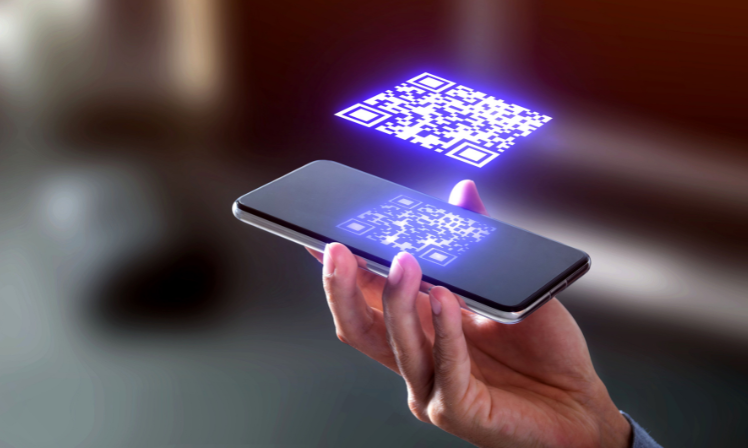
Also known as matrix barcodes or QR codes, 2D barcodes represent a type of code that stores data in two dimensions. Unlike 1D barcodes that only consist of horizontal lines, 2D barcodes have the capacity to encode information both vertically and horizontally. This multidimensional approach enables them to store far more data, making them perfect for applications where space constraints exist. Whether it's text, numeric data, or even images, 2D barcodes cater to a variety of needs, earning widespread usage in multiple sectors.
Applications of 2D Barcodes
Comparison with 1D Barcodes
When stacked against 1D barcodes, 2D barcodes exhibit a host of benefits. The primary distinction lies in the volume of data they can store. While 1D barcodes can only manage a limited set of alphanumeric characters, 2D barcodes are capable of handling far more intricate data, including special symbols and even URLs. This capacity renders 2D barcodes significantly more adaptable for scenarios requiring the storage of more extensive information. Moreover, 2D barcodes are more secure than their 1D counterparts, as they can be encrypted to ward off tampering and unauthorized access, providing an extra layer of protection essential for safeguarding data integrity.
2D barcodes offer a dynamic solution, revolutionizing information storage and retrieval by delivering a compact and convenient format. Their versatility and security offer tremendous advantages to businesses keen on optimizing operations and enhancing efficiency. Should your business contemplate implementing 2D barcodes, explore the offerings from IBN Link for all your barcode needs. Visit their site at https://ibn.link/ to discover how their expertise can empower you to fully leverage the potential of 2D barcodes.
To explore the advantages and convenience of 2D barcodes
visit IBN Link and unlock a world of possibilities.